Event Processing
The main event loop is initiated by calling FApplication::exec().
While the event loop is running, the system continuously monitors
for events and sends them to the currently focused object.
Terminal events, such as keystrokes, mouse actions, or resizing the terminal,
are translated into FEvent objects, and are sent to the active FObject.
You can also use the FApplication::sendEvent() or FApplication::queueEvent()
methods to send a specific event to an object.
Objects derived from the class FObject process incoming events by
overriding the virtual method event(). The FObject itself can only
call its own events, onTimer() and onUserEvent(), and discards all others.
The FObject-derived class FWidget also reimplements the event() method
to handle further events. FWidget calls the FWidget::onKeyPress method
when a key is pressed, or the FWidget::onMouseDown method when a mouse
button is clicked.
An event in FINAL CUT is an object that inherits from the base class
FEvent. There are several types of events, represented by an enum value.
For example, the method FEvent::type() returns the type
Event::MouseDown when you press down a mouse button.
Some events contain data that doesn't fit in a standard FEvent object.
Some types of events have data that cannot be stored in an FEvent object.
For example, a mouse click event from the mouse requires storing which
button was triggered and the position of the mouse pointer at that time. Classes
derived from FEvent, such as FMouseEvent, store this data.
Widgets get their events from the event() method inherited from FObject.
In FWidget, the implementation of event() forwards the most common event
types to specific event handlers, such as FMouseEvent(), FKeyEvent(),
or FResizeEvent(). There are many other available events. You can create
your own types of events and send them to other objects and widgets.
enum class Event : uInt8
{
  None,              // Invalid event
  KeyPress,          // Key pressed
  KeyUp,             // Key released
  KeyDown,           // Key pressed
  MouseDown,         // Mouse button pressed
  MouseUp,           // Mouse button released
  MouseDoubleClick,  // Mouse button double click
  MouseWheel,        // Mouse wheel rolled
  MouseMove,         // Mouse move
  FocusIn,           // Focus in
  FocusOut,          // Focus out
  ChildFocusIn,      // Child focus in
  ChildFocusOut,     // Child focus out
  FailAtChildFocus,  // No further focusable child widgets
  TerminalFocusIn,   // Terminal focus in
  TerminalFocusOut,  // Terminal focus out
  WindowActive,      // Activate window
  WindowInactive,    // Deactivate window
  WindowRaised,      // Raise window
  WindowLowered,     // Lower window
  Accelerator,       // Keyboard accelerator
  Resize,            // Terminal resize
  Show,              // Widget is shown
  Hide,              // Widget is hidden
  Close,             // Widget close
  Timer,             // Timer event occurred
  User               // User defined event
};The following example starts a periodic timer that triggers an FTimerEvent()
every 100 milliseconds. Then, the virtual method onTimer() is repeatedly
called within the same dialog.
File: timer.cpp
#include <final/final.h>

using namespace finalcut;

class DialogWidget : public FDialog
{
  public:
    explicit DialogWidget (FWidget* parent = nullptr)
      : FDialog{parent}
    {
      label.setAlignment (Align::Right);
      id = addTimer(100);
    }

  private:
    void initLayout()
    {
      setText ("Dialog");
      setGeometry (FPoint{25, 5}, FSize{23, 4});
      label.setGeometry (FPoint{1, 1}, FSize{10, 1});
      value.setGeometry (FPoint{11, 1}, FSize{10, 1});
      FDialog::initLayout();
    }

    void onTimer (FTimerEvent* ev) override
    {
      if ( id == ev->getTimerId() && n < 9999999999 )
      {
        value.setNumber(n);
        value.redraw();
        n++;
      }
    }

    FLabel label{"Counter: ", this};
    FLabel value{"0", this};
    long n{0};
    int id{0};
};

auto main (int argc, char* argv[]) -> int
{
  FApplication app(argc, argv);
  DialogWidget dialog(&app);
  FWidget::setMainWidget(&dialog);
  dialog.show();
  return app.exec();
}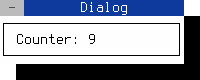
Figure 1: FObject::onTimer event handler
Note
To close the dialog, use the mouse or press Shift+F10 or Ctrl+^
Save the code as timer.cpp and compile it using the following GCC command:
g++ timer.cpp -o timer -O2 -lfinal -std=c++14Use the FUserEvent() method to create and send a custom event to
a specific object. If you want to create more than one user event, you can
specify an identification number (ID) to differentiate between them. In the
example below, the ID is 0. This number can be retrieved using the
getUserId() method.
User events should be generated in the main event loop. For this purpose,
the class FApplication provides the virtual method
processExternalUserEvent(). This method can be overridden in a derived
class to implement custom logic.
The following example reads the average system load and creates a user event
when a value changes. This event sends the current values to an FLabel
widget and displays them in the terminal.
File: user-event.cpp
#include <stdlib.h>
#include <final/final.h>
#define _BSD_SOURCE 1
#define _DEFAULT_SOURCE 1

using LoadAvg = double[3];
using namespace finalcut;

class ExtendedApplication : public FApplication
{
  public:
    ExtendedApplication (const int& argc, char* argv[])
      : FApplication(argc, argv)
    { }

  private:
    void processExternalUserEvent() override
    {
      if ( getMainWidget() )
      {
        if ( getloadavg(load_avg, 3) < 0 )
          FApplication::getLog()->error("Can't get load average values");

        if ( last_avg[0] != load_avg[0]
          || last_avg[1] != load_avg[1]
          || last_avg[2] != load_avg[2] )
        {
          FUserEvent user_event(Event::User, 0);
          user_event.setData (load_avg);
          FApplication::sendEvent (getMainWidget(), &user_event);
        }

        for (std::size_t i = 0; i < 3; i++)
          last_avg[i] = load_avg[i];
      }
    }

    // Data member
    LoadAvg load_avg{}, last_avg{};
};


class DialogWidget final : public FDialog
{
  public:
    explicit DialogWidget (FWidget* parent = nullptr)
      : FDialog{"User event", parent}
    { }

  private:
    void initLayout()
    {
      FDialog::setGeometry (FPoint{25, 5}, FSize{40, 6});
      loadavg_label.setGeometry (FPoint{2, 2}, FSize{36, 1});
      FDialog::initLayout();
    }

    void onUserEvent (FUserEvent* ev) override
    {
      const auto& lavg = ev->getData<LoadAvg>();
      std::setlocale(LC_NUMERIC, "C");
      loadavg_label.clear();
      loadavg_label << "Load average: " << lavg[0] << ", "
                                        << lavg[1] << ", "
                                        << lavg[2] << " ";
      loadavg_label.redraw();
    }

    FLabel loadavg_label{this};
};

auto main (int argc, char* argv[]) -> int
{
  ExtendedApplication app(argc, argv);
  DialogWidget dialog(&app);
  FWidget::setMainWidget(&dialog);
  dialog.show();
  return app.exec();
}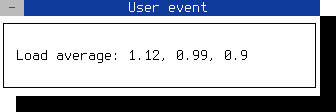
Figure 2: User event generation
Note
To close the dialog, use the mouse or press Shift+F10 or Ctrl+^
After entering the source code in user-event.cpp you can compile the above program with gcc:
g++ user-event.cpp -o user-event -O2 -lfinal -std=c++14